While previous Wi-Fi generations focused primarily on raw peak speeds, Wi-Fi 7 Multi-Link Operation (MLO) enables devices to utilize multiple frequency bands, specifically 5 GHz and 6 GHz, simultaneously. This shift from a single-link to a multi-link paradigm is designed to enable more resilient, lower-latency connections even in challenging RF environments
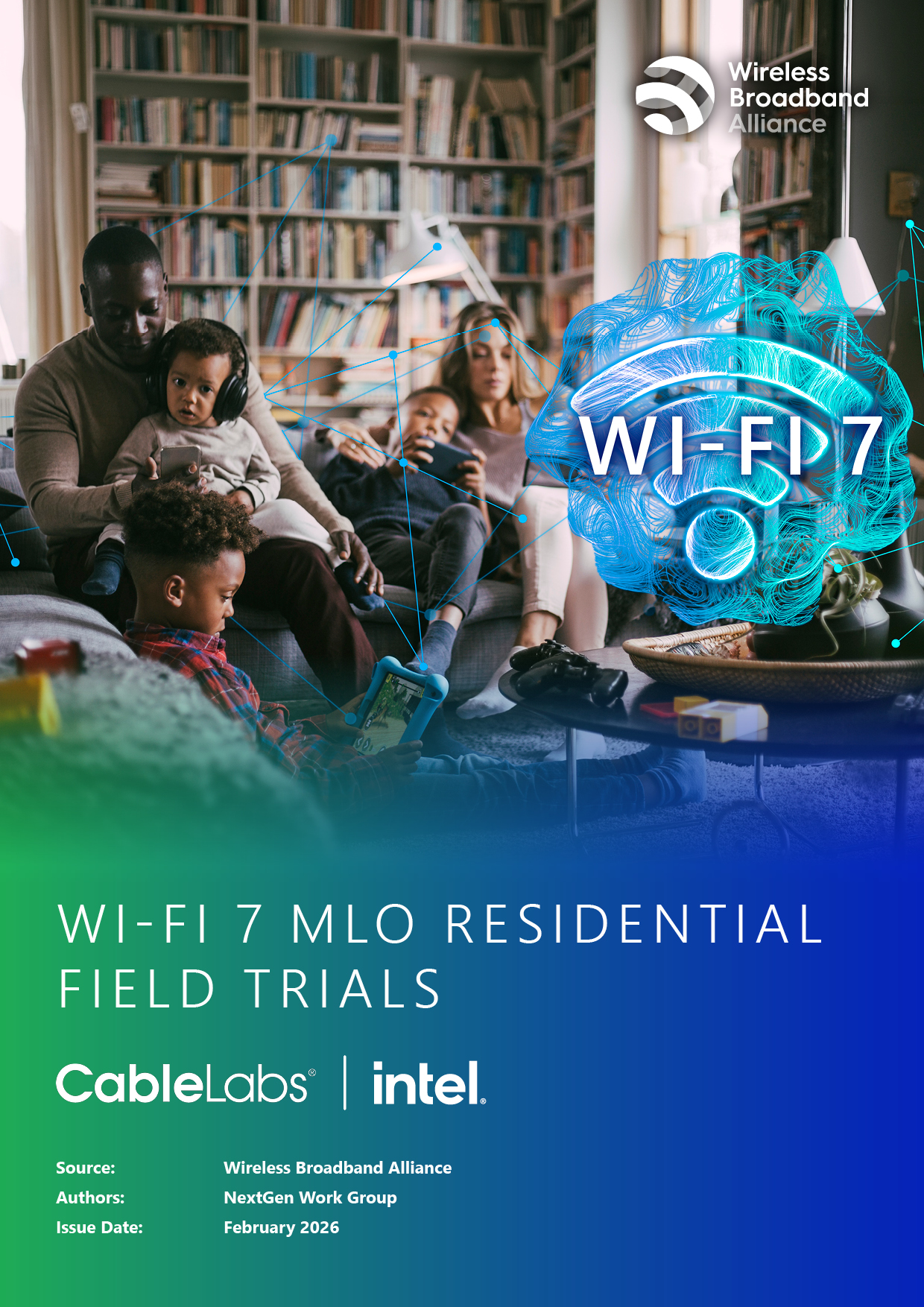
As part of the WBA Wi-Fi 7 Field Trials program, the Phase 1 evaluated single-link throughput, in collaboration with CableLabs and Intel Corporation, this new phase trials held in a real-world 4,500-square-foot single-family unit (SFU), demonstrate that Wi-Fi 7 MLO can represent a foundational architectural shift that brings wired-like reliability and determinism to residential wireless networking.
The test environment paired a tri-band Wi-Fi 7 access point with a Wi-Fi 7 client powered by Intel® BE200 silicon using Enhanced Multi-Link Single Radio (eMLSR) architecture. The trials confirm that Wi-Fi 7 MLO represents a fundamental architectural shift, moving Wi-Fi beyond peak speed claims toward reliability, continuity, and predictable performance in real homes.
The results demonstrate that Wi-Fi 7 MLO does more than increase speeds—it fundamentally changes how Wi-Fi behaves in residential deployments. By validating MLO with commercial hardware and realistic home conditions, the trials confirm that Wi-Fi 7 is ready to support multi-gigabit broadband services and next-generation applications, even with single-radio client designs.
Key Findings
- Doubled Throughput Under Interference: In the presence of heavy 6 GHz co-channel interference, MLO achieved up to doubled aggregated throughput compared to legacy single-link operation.
- Massive Latency & Jitter Reductions: Results showed a 35 – 48% reduction in application-layer latency and up to a 40% reduction in MAC-layer jitter, supporting the “lag-free” requirements of cloud gaming and XR.
- Reliability Over Best-Effort Throughput: MLO demonstrated more predictable and continuous performance characteristics in testing, narrowing the gap between advertised access speeds and the actual in-home user experience.
- Optimizing 6 GHz Coverage: MLO dynamically balances traffic between 6 GHz and 5 GHz, which may allow ISPs to maximize 6 GHz capacity without sacrificing the range and coverage of the 5 GHz band.
- Seamless Mobility (Make-Before-Break): MLO-enabled clients maintained uninterrupted data flows when moving into traditional “dead zones” (e.g., backyards), replacing legacy “break-before-make” roaming that typically causes dropped video calls or frozen streams.
- Mass-Market Readiness: Performance gains were achieved using eMLSR architecture, confirming that Wi-Fi 7 is capable of scaling rapidly across mainstream consumer devices, accelerating ecosystem adoption and reducing cost barriers for device manufacturers and service providers.
Interested in Joining?
For current WBA Members:
Register your interest in the next trial phase: https://wballiance.com/engage-with-wba/
For organizations not yet part of WBA:
Contact WBA Membership at membership@wballiance.com to learn how to join and participate in upcoming programs.
Download other publications, visit the WBA Resource Centre.
Key Participants: